CONSERVATION CORNER
A weekly blog for all things conservation

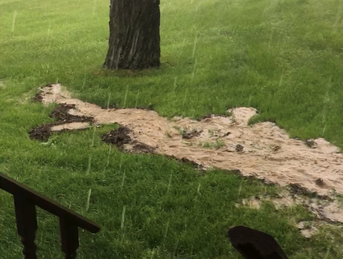 By: Kevin Brown, Agricultural Resource Specialist Hopefully part 1 gave you some things to think about and maybe even got your blood boiling a little bit. That was my intention. I want you thinking about this and even thinking that maybe you can do something about it in your own little corner of the world. It really doesn’t take much to make a huge difference in some cases. Our goal, as homeowners AND business owners, should be that absolutely no rainwater leaves our properties, especially in normal rainfall events. NONE. I know it is easy to run inside while it is raining and just not realize, or maybe even care, where that rainwater is going. Well we should. Next time it rains, grab the rain suit and head outside. Take a stroll along your property and take note of what you see. Are you adding to the problem, or not? Is water leaving your property, or not? If it is, is there anything you can do about it? Solutions sometimes can be easy. Sometimes they are not. It depends on the issue and the amount of land to work with. For most homeowners, lawns are the best. Well actually, completely undisturbed areas (woods and grown up areas) are the best. Grass is a good second best. Lawns will handle any kind of normal rainfall unless it gets packed down by running over it all the time. So, what things do we have to worry about? Buildings, driveways, and anything impermeable. Also, do you have gutters and downspouts? Do you really need them? Sometimes you do if you have a basement taking on water. But in many cases, you probably don’t. Remember, once you concentrate water, you can’t undo it. It is going all the way to the ocean. Don’t care? Well then, we will just give you access to only the water that you keep on your property and see how that goes. You get to bath, drink, and use the restroom only to the point that you still have water. Now do you care? I bet you will run out pretty fast.
Other solutions- I put a belt “diversion” across my driveway. It kicks all rainwater off my driveway and into my lawn. It ends up at the base of a tree. Does that matter? I don’t know, but I can show you video (or the picture above) where the stream of water 18 inches wide and 1-2 inches deep completely disappears into the ground in less than 10 feet. Usually in less than 5 feet. It is amazing to see. Instead of it going to the township ditch and all the way to the Bay, it is in/under my land for myself and all the plants growing there to use. If you have gutters, can you outlet them on to a level area, or even a small depression, where it will have time to spread out and infiltrate? Businesses must put in retention ponds just for this reason. Gardens- mulch them and do not till them. The water goes right into the ground. Flower beds- same thing. I have one all the way around my garage. I used to have gutters and downspouts hung to protect the flowers and the soil from eroding when the hard rain hit it. I took the gutters off and mulched the bed with wood mulch. Problem solved, and the flowers get all the rain they want. It is in the ground. Extreme examples are rain gardens and permeable driveways, but you can do things much simpler than these. It’s not rocket science. We just need to care, and we have to look at our facilities when it is raining and take note of where it is going and how we can improve it. If you need help, call me. I will come out when it is raining and take a look. I will explain the rain tax next week. It is happening closer than you think. The Bradford County Conservation District is committed to helping people manage resources wisely. You can visit the Bradford County Conservation District at 200 Lake Rd in Wysox across from the Wysox Fire Hall. Contact us at (570) 485-3144 or visit our web page at www.bccdpa.com.
0 Comments
Leave a Reply. |

AuthorsVarious staff at the Bradford County Conservation District Archives
April 2024
Categories
All
|
Bradford County Conservation District
Stoll Natural Resource Center 200 Lake Road, Suite E | Towanda PA 18848 Phone: (570)-485-3144 |
Find Us on Social Media!
|
 RSS Feed