CONSERVATION CORNER
A weekly blog for all things conservation

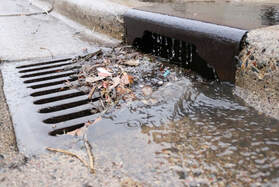 By: Kevin Brown, Agricultural Resource Specialist Ok, let’s get down to the brass taxes. What is a rain tax, where is it happening, and what can I do to help the situation without going to that extreme? Who wants to be taxed for rain falling on their property? “We don’t have control over that” is what they say, but we DO have control over what happens to it from there. Can you imagine Towanda (or insert your community here) before it was Towanda? Especially because it is built on a side hill. One thousand years ago a 2-inch rainfall event happened, and all that rain went into the ground. The river level was unaffected. The rainfall gradually moved through the soil layers and the excess was released into the river days or weeks or even months later. The result, no flooding. Picture it during the next 2-inch rainfall that we get. Rain hits your home, it hits the streets, it hits the schools and businesses. In some places there are no places whatsoever for it to infiltrate into the ground. It goes from your downspout to the curb, dumped into the street, adds to the water already running down the street, hits the storm drain and goes DIRECTLY to the river. The result, billions of gallons of water now going down the river that never made it there before. And it is going there like NOW. Add that to water coming from Sayre and Waverly and Athens and Chemung and Binghamton and Owego, etc. The town fathers didn’t think about this when they set up some of the systems, but as more and more communities grow, they are thinking about it now. Now we have a huge problem. We have concentrated all that water and sent it downstream (along with it- pollution, erosion, sediment, nutrients, etc.). Again, do we care enough to try and fix it one house at a time? Or do we institute a (wait for it…) Stormwater Fee (RAIN TAX)? NNNOOOOOOOO!! How do you fix such a problem? I don’t know as we know yet. It is a problem that has been added on to and added on to and added on to and what do you do with it now? A solution to that big problem is going to take monies that we can’t even fathom. Do you know the old saying, “How do you eat an elephant? One bit at a time”? It will be much easier to take on the solution one house, one business, one “bite” at a time. Are you willing to do your part? Is your neighbor? Can we do it as a community? Or does it come down to trying to fix the whole problem at once, which requires big government and huge amounts of money???? I have said it many times through this series, once you concentrate water, it is extremely hard to “un” concentrate it. To do your downspout is relatively easy. To do the entire “billion” gallons coming from Towanda, not quite as easy. So, how do we get there? (A fee?)
Think it is far-fetched. Luzerne County is doing it. So are others. I can give you examples of fees (tax bills) that people have received that they are obligated to pay to try and fix this enormous problem. It has been in the news. They are trying to fight it, and maybe it will work and maybe it won’t, but here is the cold hard truth, the problem is not going away either way. For the sake of the streams, rivers, Bay, people’s homes and property, etc., we need to start looking at how to lessen the problem. Stormwater Authorities in Luzerne County are taking any area that you own that is impermeable and taxing you for it. There is a base amount for everyone, and then they add more for larger impermeable surfaces. This money will go towards trying to fix the problem. We are talking buildings, roadways, sheds, etc., etc. The “fix” will be extremely expensive if we try to tackle the entire “elephant”. A better approach would be that we all do our own little part and as an accumulation of small parts, the big issue goes away. Again, it typically doesn’t take much effort individually and we are all better off for it. Let’s keep water right here where we can use it ourselves. It is required for survival. The Bradford County Conservation District is committed to helping people manage resources wisely. You can visit the Bradford County Conservation District at 200 Lake Rd in Wysox across from the Wysox Fire Hall. Contact us at (570) 485-3144 or visit our web page at www.bccdpa.com.
0 Comments
Leave a Reply. |

AuthorsVarious staff at the Bradford County Conservation District Archives
April 2024
Categories
All
|
Bradford County Conservation District
Stoll Natural Resource Center 200 Lake Road, Suite E | Towanda PA 18848 Phone: (570)-485-3144 |
Find Us on Social Media!
|
 RSS Feed